Skip to content
LimassolCarnival

Six eras · 28 moments · with sources

The history of the Limassol Carnival

Every year, every float, every king, with sources.

Chapter 1 · Antiquity

Antiquity

Amathus and the Aphrodisia

Local tradition traces the carnival spirit to ancient Amathus: the Aphrodisia (the «Karposis»), the masked rites of Dionysus and the myth of Ariadne, re-enacted each year with disguises according to Plutarch. It is tradition rather than documented continuity, but the city keeps it with pride.
Source: Διάλογος, 15/02/2015 ↗

Chapter 2 · Lusignan & Venetian rule

Artistic impression (AI) — not an archive photograph

1566

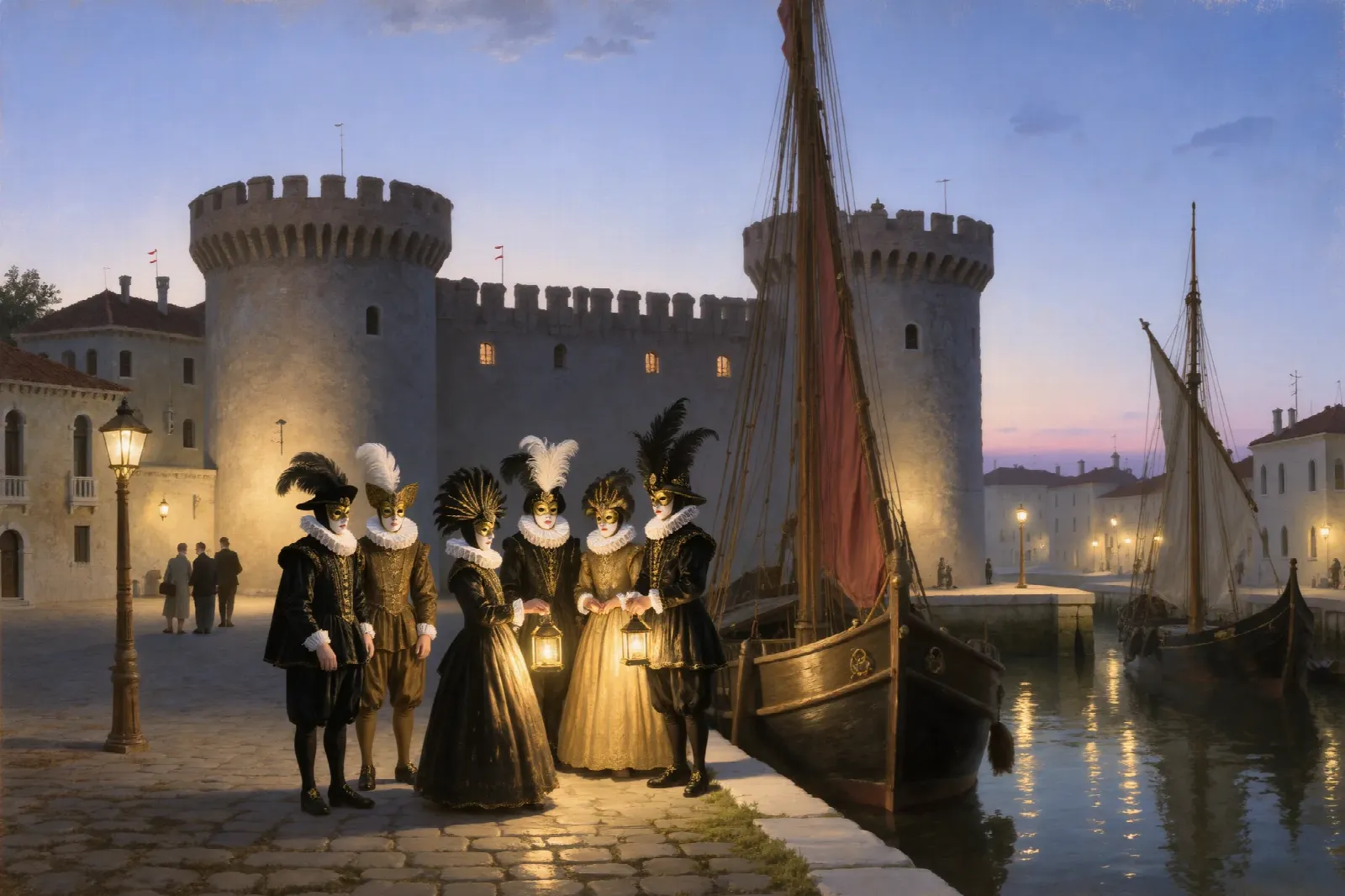
Christoph Fürer describes the carnival

The German traveller Christoph Fürer von Haimendorf, on his way to the Holy Land, records the carnival feasts of the Cypriot nobility under Venetian rule: games, dances, hunting and rich meals. It is the oldest description of carnival in Cyprus.

Source: Reporter, 26/02/2023 ↗

Also in this era

Lusignan & Venetian rule

The other moments of the era, in order.

  1. 12th century

    Saint Neophytos scolds the Cypriots

    The first written witness: Saint Neophytos the Recluse scolds Cypriots for adopting a foreign festival before Lent. Carnival had already reached the island.

    Source: Βικιπαίδεια ↗

  2. Lusignan rule

    Lusignan jousts

    Under the Lusignans (12th–14th c.) the nobles' carnival included jousting, dances and lavish banquets. The Franks and later the Venetians brought the customs of the European carnival to Cyprus.

    Source: Reporter, 26/02/2023 ↗

Chapter 3 · Ottoman period

Ottoman period

The pellomaskes are born

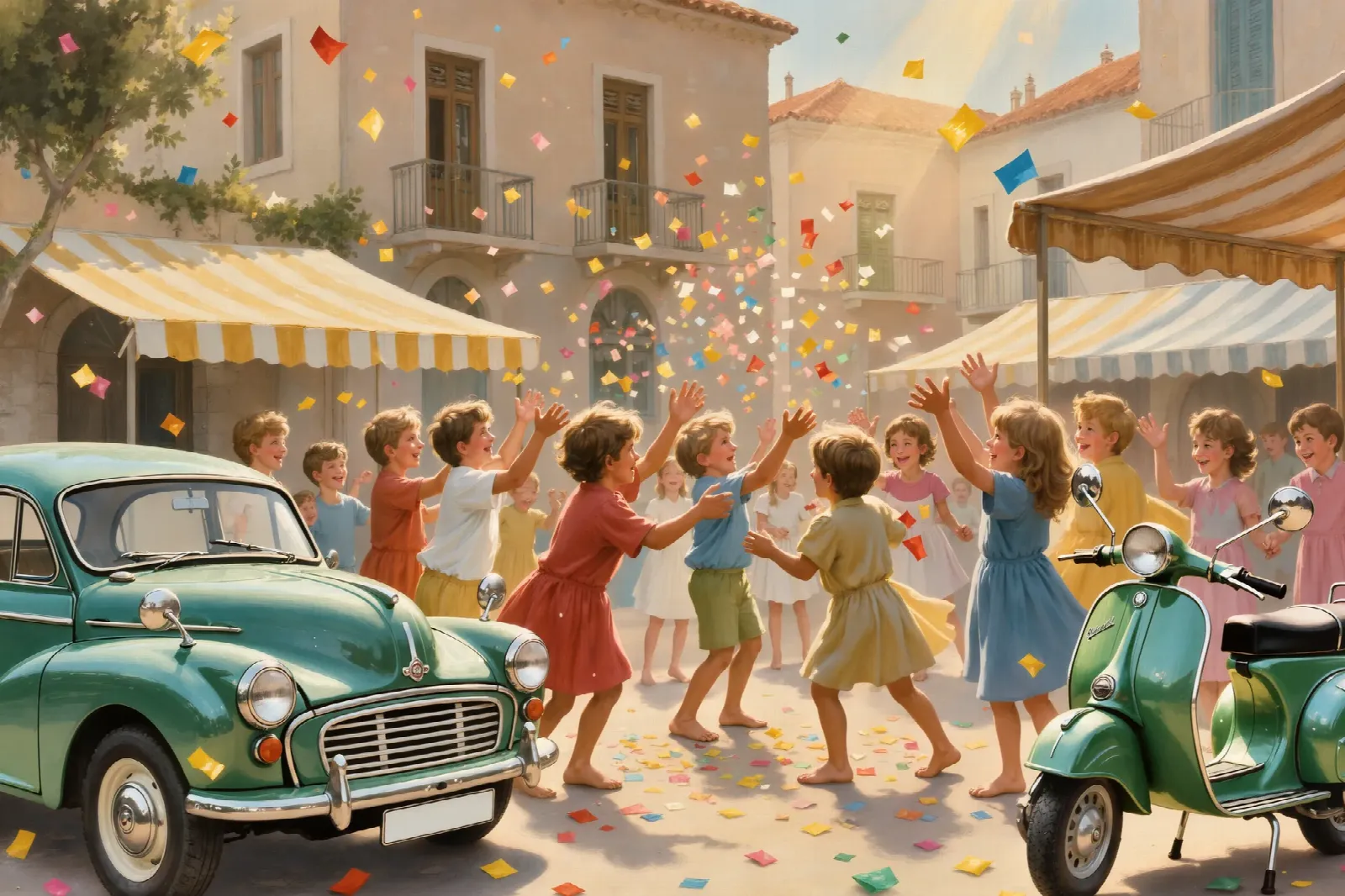
Without an official carnival, Limassolians keep the Triodion at home: Tsiknopempti with sausages on the coals, masks of charcoal, scarves and sheepskin, men dressed as women and the game of «guess who I am». This is the birth of the «pellomaska», the improvised crazy disguise the poet Vasilis Michaelides wrote about and the city still keeps.

Source: Reporter, 26/02/2023 ↗

Chapter 4 · British rule

Artistic impression (AI) — not an archive photograph

1898

The first Komitato and Diogenes with his lantern

The first jury, the «Komitato», is formed with a prize of 20 gold francs for the best costume. The newspaper Alithia (18/02/1898) reports that Yiangos Lanitis won it as Diogenes with his lantern. The Komitato would run the carnival until 1974.

Source: Reporter, 26/02/2023 · Σημερινή, 12/02/2026 ↗

Also in this era

British rule

The other moments of the era, in order.

  1. 1878

    British rule and the rise of the city

    Under British rule Limassol becomes the trading port of wine and carob. Mayors Christodoulos Sozos, Araouzos, Chr. Hadjipavlou and Alekos Zenon, together with citizens, journalists and the Greek schools, turn the spontaneous revelry into an urban institution.

    Source: Δήμος Λεμεσού ↗

  2. 1905

    The Athenaion ball

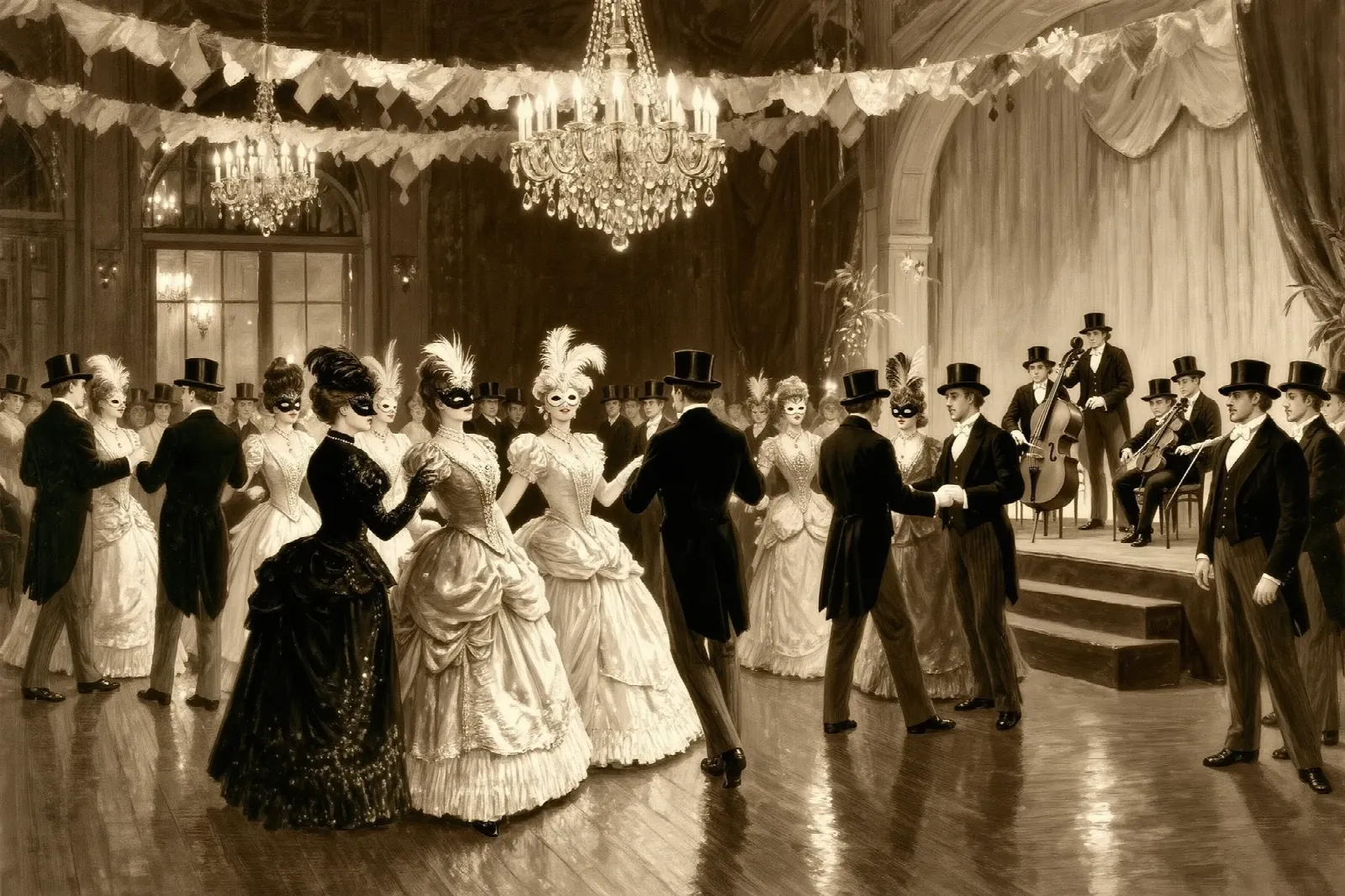
    The Athenaion society holds one of the city's first carnival balls, lasting until dawn. Society balls with European costumes, mandolin ensembles and masquerades become the heart of the urban carnival.

    Source: Reporter, 26/02/2023 ↗

  3. c. 1920

    The first parades

    Around 1920 the masqueraders take to the streets in an organised way, on foot, on donkeys, bicycles and carriages, and the first parades grow into long processions. Many sources give 1921 as the start of the organised Limassol Carnival.

    Source: Reporter · ink.com ↗ Artistic impression (AI) — not an archive photograph

  4. 1930s

    Rialto and Yiordamli

    The balls move into the Rialto and Yiordamli cinemas, where all social classes mix: the dances of the guilds, of Aris and of GSO. The tavernas fill with serenaders.

    Source: Διάλογος, 15/02/2015 ↗

  5. 1936

    The first float of King Carnival

    The float of King Carnival appears for the first time, designed by the artists Giorgos Fasouliotis and Viktor Ioannides. The Paratiritis newspaper reports 700+ visitors from other towns spending £1,500. The float would be the King until 2007.

    Source: Reporter, 26/02/2023 ↗ Artistic impression (AI) — not an archive photograph

  6. 1937

    Giorgallettos' barbershop

    Giorgos Giorgallettos opens his barbershop at sixteen; it becomes a school of mandolin and guitar. The city's great serenader companies (the Kasii, the Giorgallettoi) are born in the barbershops.

    Source: Reporter, 26/02/2023 ↗

  7. 1940s

    The serenades become the sound of the city

    Ionian and Athenian serenades, with mandolins and guitars, move from the tavernas into the alleys, where women listen from the balconies. Every Tsiknopempti journalist Georgios Templar opens his house on Agiou Andreou; the pellomaskes start their tour from there.

    Source: Δήμος Λεμεσού · Διάλογος ↗ Artistic impression (AI) — not an archive photograph

  8. 1945

    King Farouk's fez

    At Platres Templar interviews King Farouk of Egypt, who gives him his red fez. The fez becomes the symbol of King Carnival.

    Source: Διάλογος, 15/02/2015 ↗

  9. 1947

    The Giorgallettou Serenaders

    Giorgallettos' company officially takes the name «Giorgallettou Serenaders». It still exists and sings every year outside Perama in memory of its founder.

    Source: Reporter, 26/02/2023 ↗

  10. 1953

    The first Children's Parade

    In the Municipal Garden 200 children parade with King Carnival leading on horseback. The Children's Parade settles on the first Sunday of carnival and is today the island's biggest children's celebration.

    Source: Reporter, 26/02/2023 ↗

Chapter 5 · From the Komitato to the Municipality

Artistic impression (AI) — not an archive photograph

1960

The serenaders' cape

The Fanaris serenaders are the first to wear the cape as a uniform. In the 1960s the floats satirise the news («Caliphate», 1961), nightclubs hold masked balls with violins and saxophones, and in 1967 the Municipality of Patras donates a float to Limassol.

Source: Reporter · AlphaNews (αρχείο ΓΤΠ) ↗

Also in this era

From the Komitato to the Municipality

The other moments of the era, in order.

  1. 1969

    Majorettes and prizes

    With Yiangos Louizides chairing the organising committee, prizes are established for the best floats and costumes. Majorettes appear for the first time in the Children's Parade; in 1973 they join the Grand Parade and by 1980 they are an inseparable part of it.

    Source: Reporter · Ελευθερία 1969 ↗

  2. 1974

    The carnival becomes a municipal affair

    The year of the invasion closes the Komitato era (1898–1974). The organisation passes to the Municipality of Limassol and its Cultural Services. The carnival never stopped, but for years it was celebrated in a lower key.

    Source: Σημερινή, 12/02/2026 ↗ Artistic impression (AI) — not an archive photograph

  3. 1996

    The modern Grand Parade

    From the mid-1990s the Grand Parade takes its present shape on Makarios Avenue: hundreds of groups, floats with sound systems, choreographies. Elena Papadopoulou's «Magic of the Deep» wins first prize; twenty years later she would be Queen.

    Source: All About Limassol · City ↗

Chapter 6 · The modern carnival

Artistic impression (AI) — not an archive photograph

2024

The Museum of the Limassol Carnival

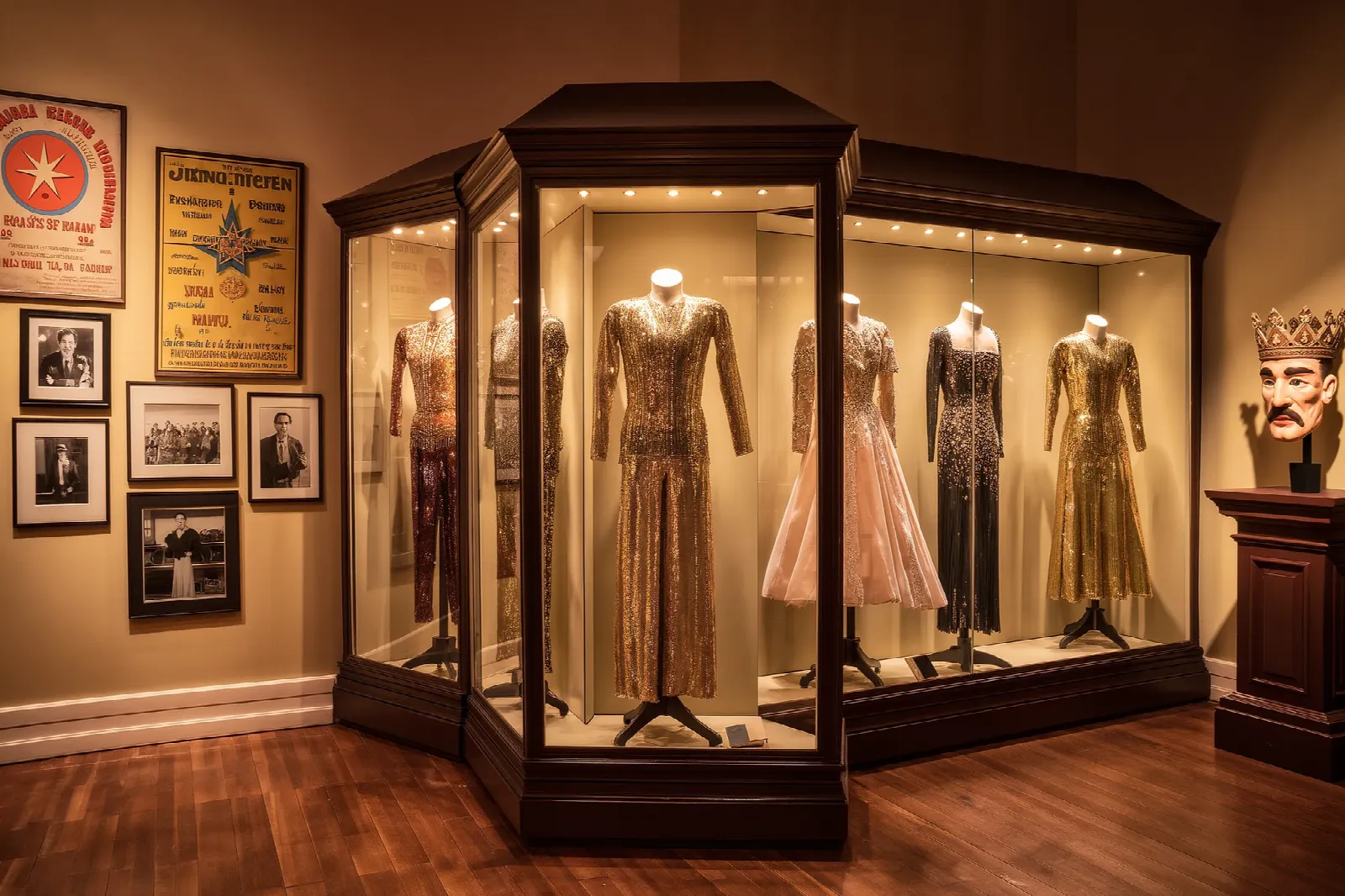
On 26 May 2024 the Museum of the Limassol Carnival opens on three floors of the «Panos Solomonides» Municipal Cultural Centre: costumes, floats, photographs and posters from a century, «an ark of popular memory» in the words of Mayor Nikos Nikolaides.

Source: fotinitsiridou.com · carnivalmuseum.org.cy ↗

Also in this era

The modern carnival

The other moments of the era, in order.

  1. 2000

    The pellomaskes get a float

    The pellomaskes and the «madmen» get their own float in the parade, with the «King of Laughter and Madness», who wears a cooking pot instead of a crown.

    Source: Μηχανή του Χρόνου ↗

  2. 2008

    The King becomes a person

    Until 2007 King Carnival was a themed float. By decision of the Municipal Council, from 2008 the role is embodied every year by an active carnival figure of the city, chosen by the Mayor and the Cultural Services: a king, a queen, even a royal couple.

    Source: City, 01/02/2016 ↗

  3. 2014

    Europe comes to Limassol

    In May Limassol hosts the 34th convention of the Federation of European Carnival Cities (FECC). The same year CNN writes about «the most colourful event in Cyprus» and «Memorandum the Great» hands out money to his subjects.

    Source: Διάλογος · Wikipedia ↗

  4. 2015

    Intangible Cultural Heritage

    The Limassol Carnival is inscribed in the National Inventory of Intangible Cultural Heritage of Cyprus (Cyprus National Commission for UNESCO) for its oral traditions, social practices and traditional craftsmanship.

    Source: UNESCO Cyprus ↗

  5. 2020–2021

    The pandemic

    The parade of 1 March 2020 takes place days before the first lockdown. In 2021 there are no parades and «King Lemesios» stays two years on the throne, the only one in history. In 2022 the carnival returns indoors, with Safe Pass and online streaming.

    Source: Kanali 6 · City, 21/02/2022 ↗

  6. 2025

    Rio comes to Limassol

    127 groups and 35,000 carnival-goers in the Grand Parade. The King and Queen of the Rio Carnival send a message and visit Limassol in March. Marija Savina writes «Life is a Carnival».

    Source: ToThemaOnline, 14/02/2025 ↗

  7. 2026

    700 drones over the Old Port

    «Limassol Madness»: 115 groups, projection mapping on the District Administration building, the first robot in the parade and a finale of 700 drones over the Old Port. The carnival also travels to Seville with an exhibition from the Pattichion Historical Archive.

    Source: Cyprus Mail, 21/02/2026 ↗ Artistic impression (AI) — not an archive photograph

The editions

The book of years

A page for every carnival since 2008, when the King became a person. Tap a year.

Year Tsiknopempti Grand Parade On the throne groups Status
2032 Thu 4 Mar Sun 14 Mar — — Upcoming
2031 Thu 13 Feb Sun 23 Feb — — Upcoming
2030 Thu 28 Feb Sun 10 Mar — — Upcoming
2029 Thu 8 Feb Sun 18 Feb — — Upcoming
2028 Thu 17 Feb Sun 27 Feb — — Upcoming
2027 Thu 4 Mar Sun 14 Mar Σπύρος Ματσούκας — Upcoming
2026 Thu 12 Feb Sun 22 Feb Αμαρυλλίς Κυριάκου 115 Held
2025 Thu 20 Feb Sun 2 Mar Βασίλης Παπαβασιλείου 127 Held
2024 Thu 7 Mar Sun 17 Mar Χριστιάνα Χαραλάμπους — Held
2023 Thu 16 Feb Sun 26 Feb Δημήτρης Γιαννακού 100 Held
2022 Thu 24 Feb Sun 6 Mar Βέρα Ευθυμίου Παρλαλίδου — Indoors
2021 Thu 4 Mar Sun 14 Mar Γιώργος Νικολάου — Cancelled
2020 Thu 20 Feb Sun 1 Mar Γιώργος Νικολάου — Held
2019 Thu 28 Feb Sun 10 Mar Μόνικα Πιερίδου & Μαρία Νικολαΐδη Αφάμη 103 Held
2018 Thu 8 Feb Sun 18 Feb Χριστάκης & Ζήνα Μαχαλεκκίδη — Held
2017 Thu 16 Feb Sun 26 Feb Μαρία Πιερή Συκοπετρίτου — Held
2016 Thu 3 Mar Sun 13 Mar Έλενα Παπαδοπούλου — Held
2015 Thu 12 Feb Sun 22 Feb Ανδρέας Βρυωνίδης — Held
2014 Thu 20 Feb Sun 2 Mar Ντίμης Μαυρόπουλος — Held
2013 Thu 7 Mar Sun 17 Mar Έρμα Στυλιανίδη — Held
2012 Thu 16 Feb Sun 26 Feb Δώρος Ιερόπουλος — Held
2011 Thu 24 Feb Sun 6 Mar Μίλτος Παπαδόπουλος — Held
2010 Thu 4 Feb Sun 14 Feb — — Held
2009 Thu 19 Feb Sun 1 Mar Άκης Ταϊτός — Held
2008 Thu 28 Feb Sun 9 Mar — — Held